From fragmentation to oversight
Over the past year, I've encountered it more and more frequently: companies struggling to make different compliance requirements practical and operational. Organizations face stricter regulations, increasing risks, and higher expectations from customers and regulators. As a result, they are increasingly combining different standards, such as:
The recurring question: how do I ensure these systems strengthen rather than undermine each other?
The biggest challenges in integration
Combining multiple management systems often leads to recognizable bottlenecks:
1. Duplicate processes and documentation
Without integration, multiple procedures emerge for the same topics, such as incident management or internal audits. This causes confusion, extra work, and a greater chance of errors.
2. Lack of oversight
Standard requirements, risks, measures, and actions are often tracked separately in loose documents or tools. This means the complete picture needed for good decision-making is missing.
3. Different stakeholders
Quality managers, Security Officers, and IT teams often work with different priorities and systems. This makes coordination and collaboration complex.
4. Audits and compliance pressure
Multiple standards also mean multiple audits. Without an integrated approach, this costs a lot of time, preparation, and coordination.
Based on these challenges, we often hear the question: how can systems work for and strengthen the organization, instead of causing contradiction and administrative burden?
Commonalities as a foundation
Despite the fact that each standard has its own focus area, there are indeed commonalities. Consider:
By integrating these commonalities, a management system emerges with:
This reduces workload, increases coherence, and improves the quality of decision-making.
How uComply can help
The uComply app is flexibly designed to integrate multiple standards and frameworks into one overview. It provides organizations with a central place where all management systems come together.
With uComply you can:
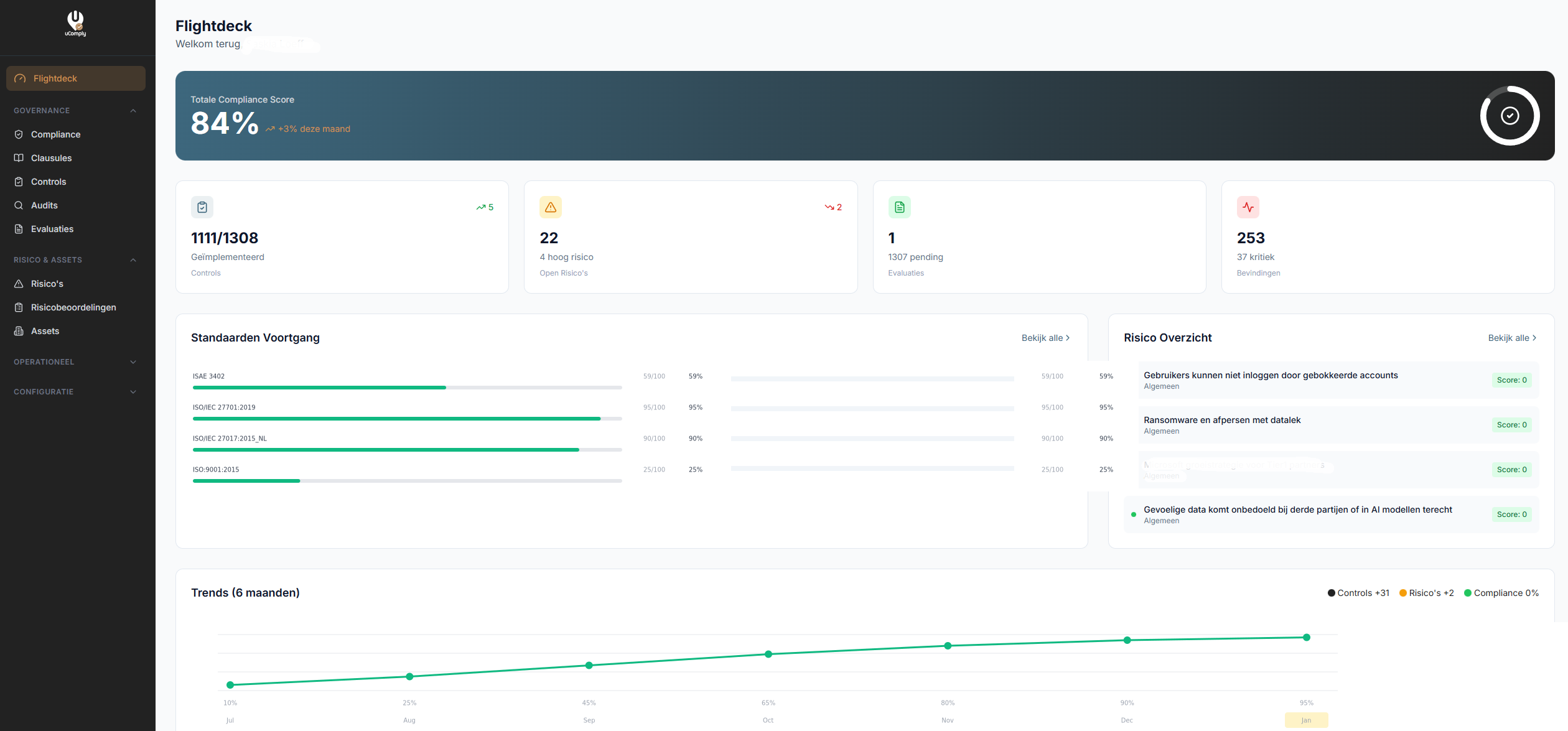
Instead of loose documents and fragmented tools, you work from one source.
Conclusion
Integrating compliance management systems is no longer a luxury but a necessity for organizations that want to work efficiently and stay audit-ready. By integrating smartly, you create oversight, reduce duplicate work, and strengthen collaboration between departments.
Curious how uComply can help your organization integrate management systems? Contact us for a no-obligation demo.